Taro
Colocasia esculenta
Want to track this crop?
Download the Farmis app
Plan your farm, track growth milestones, and get personalised advice.
Quick Info
water
High water needs, keep soil consistently moist
spacing
60 cm between plants
depth
10-15 cm deep
sun
Partial shade to full sun
season
Year-round, best planted at start of wet season
frost
Frost sensitive
height
1-1.5 metres
gemination
N/A (grown from corm tops or suckers)
sprout to harvest
6-12 months depending on variety
soil ph
5.5-6.5
soil type
Rich, moisture-retaining soil with high organic matter
fertilizer needs
High potassium and nitrogen, regular organic matter
About
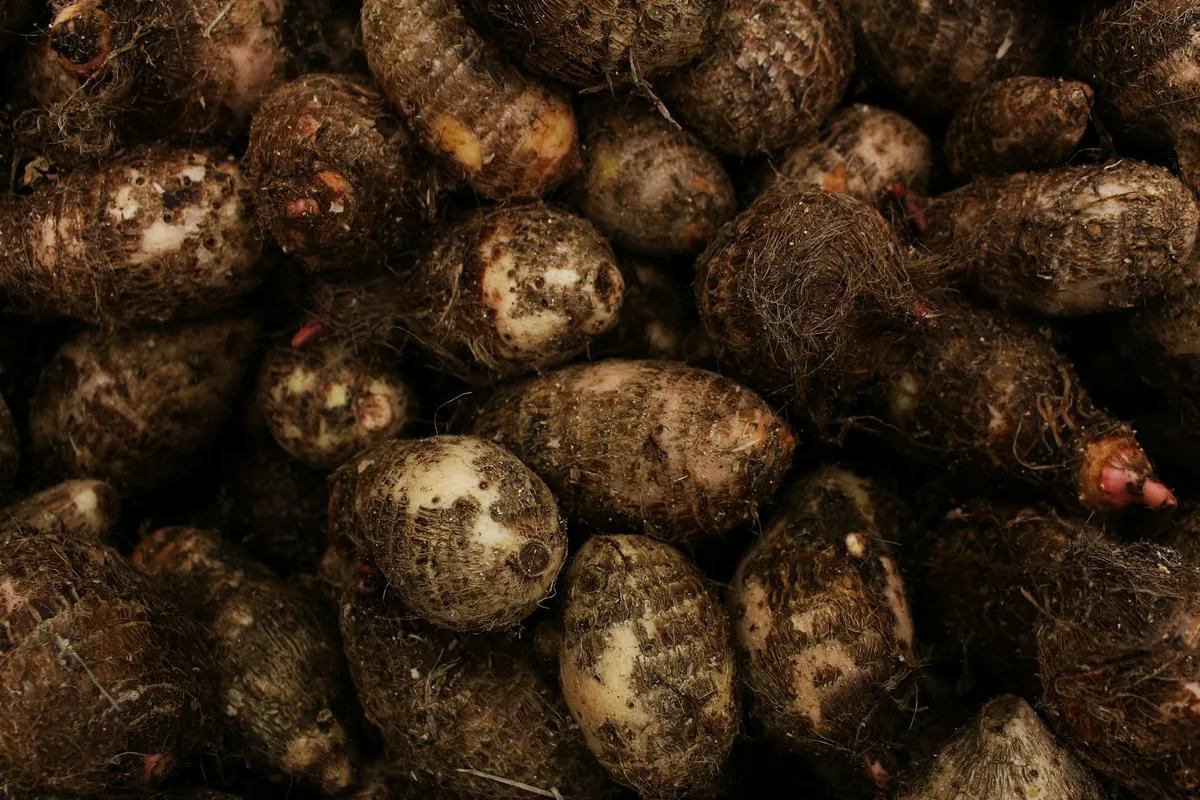
Taro is one of the oldest cultivated crops in the Pacific, deeply important to PNG culture and diet. The starchy corm is a staple food, and the young leaves (often called "taro tops") are eaten as a nutritious green vegetable.
Health Benefits
Good source of dietary fibre, potassium, magnesium, and vitamins C and E. Taro leaves are rich in protein, calcium, iron, and vitamins A and C. Low glycaemic index compared to other starchy foods.
Market Requirements
Corms should be firm, heavy for their size, and free from rot or insect damage. Remove roots and trim leaves before selling. Sold fresh at markets, often in bundles with leaves attached.